
Cloud Accounting Audit Trail Malaysia: Ensuring Compliance
In today’s fast-paced business world, cloud accounting has become a crucial tool for ensuring transparency and security in financial management. For businesses in Malaysia, adopting a cloud accounting audit trail is essential to meet regulatory standards and ensure compliance. With a reliable cloud accounting audit trail Malaysia, businesses can securely track every transaction, making it easier to maintain accurate financial statements and prepare for external audits. It is also vital to maintain and audit accounts regularly to comply with Malaysian law and ensure financial transparency. This article explores how cloud accounting audit trails can streamline your accounting processes, safeguard your financial data, and help ensure compliance with Malaysian regulations.
Introduction to Cloud Accounting
Cloud accounting is transforming the way businesses in Malaysia manage their finances by leveraging cloud-based accounting software to handle everything from financial statements and audit trails to day-to-day financial data. With cloud accounting, companies can access their financial information anytime, anywhere, making financial management more flexible and efficient. Leading cloud accounting software such as Xero, QuickBooks Online, and Zoho Books offer a suite of features designed to automate accounting processes, reduce manual errors, and provide real-time financial reporting.
By adopting cloud accounting, businesses can streamline their accounting processes, ensuring that financial resources are allocated efficiently and that financial statements are always up to date. Automation features help minimize the risk of manual errors, while collaboration tools enable teams to work together seamlessly, even when working remotely. This not only improves overall performance but also ensures that audit trails are maintained accurately, supporting compliance and transparency. As a result, cloud accounting has become an essential tool for businesses looking to enhance their financial management and stay competitive in today’s fast-paced business environment.
What is a Cloud Accounting Audit Trail?
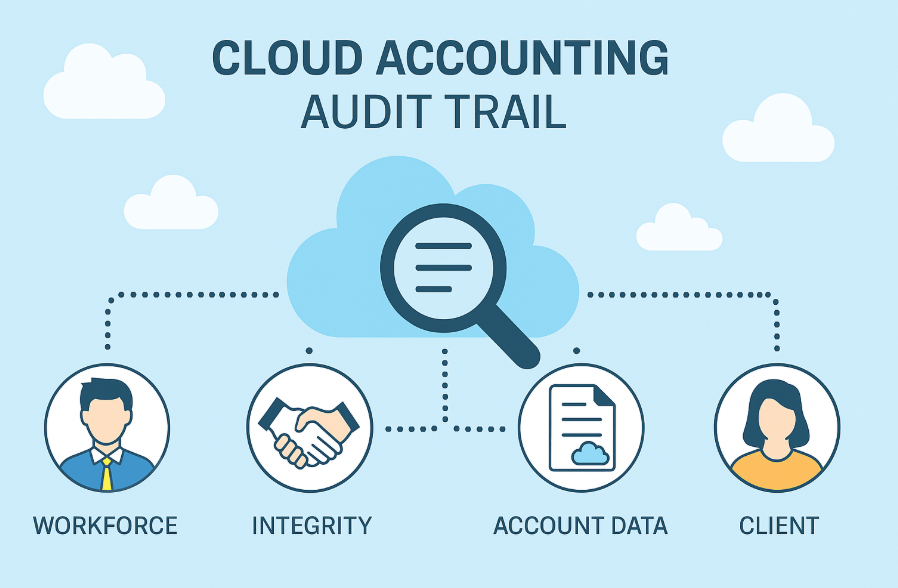
An audit trail in cloud accounting refers to a digital record of every transaction and change made within an accounting software. Whether it’s a purchase order, journal entries, or accounting entries, each activity is logged, making it possible to track any modification, enhancing accountability and transparency of financial operations. These audit logs are invaluable for internal audits and ensure that all financial documents are verifiable, promoting data security and internal controls.
For businesses in Malaysia, maintaining a clear audit trail is essential to ensure that their financial statements are accurate and reliable. Cloud accounting solutions like QuickBooks Online and Xero automatically track and store financial data, helping businesses meet audit exemption criteria and ensuring they are ready for external audits if required. These solutions also support auditing processes by providing detailed records that facilitate regulatory compliance, internal risk management, and the verification of data integrity.
Why are Cloud Accounting Audit Trails Important for Compliance in Malaysia?
The Malaysian government requires businesses to adhere to stringent financial regulations. With the implementation of the audit exemption criteria, companies that meet certain conditions, such as zero revenue companies or threshold qualified companies, may be exempt from undergoing an external audit. Audit exemption criteria are based on the company’s status during the current financial year, including thresholds related to revenue, assets, and employee count. For private companies, an exempt private company is not required to file audited accounts if it meets specific criteria, such as having no more than 20 members and not receiving a notice from the Ministry of Finance. However, the ability to produce audited financial statements upon request remains crucial.
A cloud accounting audit trail helps businesses maintain compliance by providing a clear, accessible record of all transactions. These systems automate financial management and allow for easy access to financial statements, which can be crucial in cases where the company is audited. For private companies, including certain private companies, having a detailed record of financial information through cloud accounting software simplifies the audit process and demonstrates a commitment to data integrity. In contrast, public companies are required to undergo mandatory audits and adhere to stricter reporting standards, including specific financial statement deadlines and compliance requirements.
For example, if Malaysian companies undergo an audit, the auditor can easily access transaction history and verify the company’s financial position, ensuring that all financial documents are accurate and that no fraudulent activities have taken place. This makes cloud solutions indispensable for businesses of all sizes, ensuring that their financial reporting is accurate and compliant with Malaysian regulations.
Audit Exemption Criteria in Malaysia
The Companies Commission of Malaysia has introduced updated audit exemption criteria for private companies, effective from January 1, 2025. Under these new guidelines, a private company may qualify for audit exemption if it meets any two of the following conditions: annual revenue not exceeding RM3,000,000, total assets not exceeding RM3,000,000, and a workforce of no more than 20 employees. These criteria are designed to ease the regulatory burden on small and medium-sized enterprises (SMEs), allowing them to focus more on business growth and less on compliance costs.
While exempt private companies are not required to submit audited financial statements, they are still obligated to prepare financial statements in accordance with approved accounting standards. This ensures that even without a formal audit, companies maintain accurate records of their financial position and performance. The audit exemption criteria reflect the Companies Commission’s commitment to supporting the development of SMEs in Malaysia, while still upholding the integrity of financial reporting for private companies.
How Cloud Accounting Enhances Data Security and Transparency
One of the key benefits of cloud accounting is its ability to provide robust data security. With sensitive information being stored in the cloud, these systems offer data encryption to protect against unauthorized access. Additionally, internal controls are built into these platforms, ensuring that only authorized personnel can make changes to financial data. Cloud accounting systems also support finance teams by providing secure, real-time access to financial documentation and audit trails, which is essential for regulatory compliance and accurate financial reporting.
For instance, Xero, a leading cloud accounting software, offers bank-level data encryption and multi-factor authentication to ensure the highest level of security. With over 2 million subscribers globally, Xero has demonstrated the effectiveness of cloud accounting in safeguarding sensitive financial data. Moreover, the platform provides an audit trail feature, allowing users to track every change made to financial data. This feature is critical for businesses that need to meet audit exemption criteria or comply with Malaysian tax regulations.
This level of security is crucial for businesses to maintain compliance with the Sarbanes Oxley Act and other regulations. It ensures that companies can confidently store and access financial documents, such as bank statements, financial years reports, and audit logs, knowing that they are secure and tamper-proof.
Benefits of Using Cloud Accounting Software for Malaysian Businesses
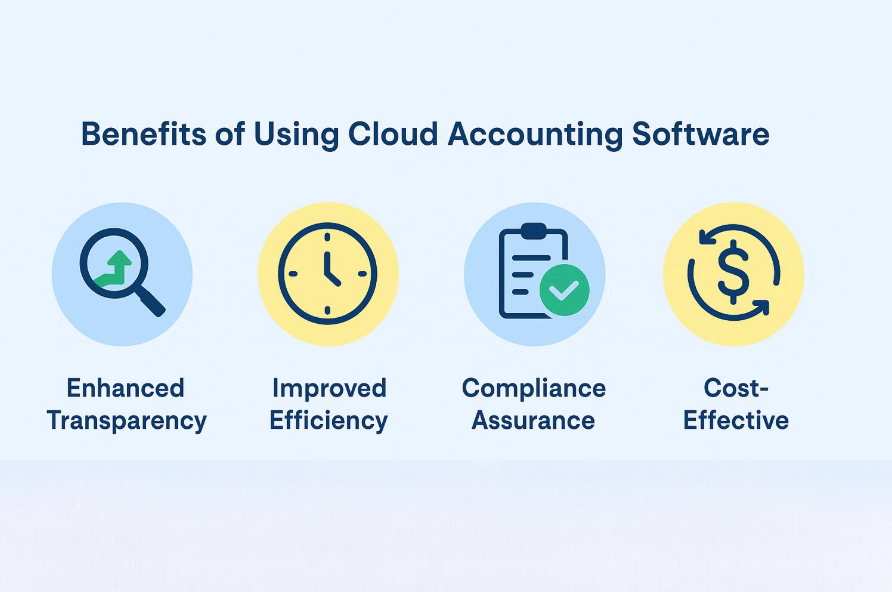
Adopting cloud accounting software like QuickBooks Online or Xero brings numerous benefits to businesses in Malaysia. These solutions offer significant benefit by improving governance, efficiency, security, and growth for Malaysian businesses:
- Enhanced Transparency: Audit trails in cloud-based accounting systems provide transparency in business activities and ensure all transactions are traceable, preventing any discrepancies. Accurate financial reports are essential for compliance and transparency, and cloud systems help maintain this accuracy. For instance, Xero offers users a detailed audit log that tracks every transaction, from invoice creation to payments, ensuring full transparency for auditors and regulators. Audit trails also play a crucial role in helping organizations detect and prevent fraud by maintaining a clear record of all activities and supporting internal controls.
- Improved Efficiency: By automating accounting processes, businesses can save time and reduce the risk of manual errors in financial reporting. Cloud accounting software allows for seamless integration with other business systems, improving overall performance and enabling faster decision-making. For example, Xero’s automation features help businesses reduce the time spent on manual data entry by over 50%, freeing up resources for strategic business planning. Traditional audits can be time consuming, but automation helps reduce this burden significantly.
- Compliance Assurance: Cloud-based systems automatically update to reflect the latest tax regulations and compliance standards, ensuring that businesses are always aligned with the latest regulations. This reduces the risk of non-compliance and helps businesses stay prepared for external audits. QuickBooks Online, for instance, includes built-in compliance features that auto-generate audited financial statements according to the latest tax rules in Malaysia.
- Cost-Effective: For small businesses and private companies, cloud accounting can be a more cost-effective solution compared to traditional accounting methods, reducing the need for manual audits and streamlining financial management. With a subscription cost that’s significantly lower than traditional accounting methods, businesses can invest in cloud solutions without breaking the bank.
Best Practices for Cloud Accounting Audit Trails
To maximize the benefits of cloud accounting and ensure the reliability of financial data, companies should implement best practices for managing audit trails. Regularly reviewing and updating audit trails is essential to confirm that all financial transactions are accurately recorded and verified. Strong internal controls should be established to prevent fraudulent activities, with access to audit trails restricted to authorized personnel only.
Cloud accounting software should be configured to provide real-time monitoring and instant alerts for any suspicious transactions, helping companies respond quickly to potential issues. It is also important to ensure that the chosen cloud accounting solution complies with relevant regulations, such as the Sarbanes-Oxley Act, and that the underlying cloud hosting services are secure and reliable. By following these best practices, companies can maintain the accuracy and integrity of their financial statements, build stakeholder trust, and ensure ongoing compliance with Malaysian and international standards.
Conclusion
In conclusion, cloud accounting audit trails are vital for businesses in Malaysia to ensure compliance and maintain accurate financial reporting. Whether a company is seeking audit exemption or preparing for a full-scale audit, cloud-based accounting systems with robust audit trails provide a reliable and secure way to manage financial data. With automation software and enhanced internal controls, Malaysian businesses can streamline their accounting processes, reduce errors, and ensure they meet regulatory requirements, ultimately improving their financial management.
By adopting cloud accounting software like Xero or QuickBooks Online, businesses can not only ensure compliance but also gain the benefits of transparency, security, and efficiency, all while reducing the time and effort traditionally spent on financial tasks.
Ready to ensure compliance and streamline your financial management? Start leveraging cloud accounting solutions today to stay ahead of the curve. Contact us now for a personalized consultation on the best accounting software for your business. Ensure your financial integrity and business success with the right tools!
Frequently Asked Questions
1. What is a Cloud Accounting Audit Trail?
A cloud accounting audit trail is a digital record of all transactions made within an accounting system, tracking every change. This ensures data integrity and compliance with regulations, making it essential for businesses in Malaysia to meet audit exemption criteria.
2. Why is an Audit Trail Important for Compliance in Malaysia?
An audit trail ensures all transactions are traceable, helping businesses maintain accurate financial statements. This is crucial for compliance and simplifying external audits or meeting audit exemption criteria.
3. How Does Cloud Accounting Help with Audit Exemption in Malaysia?
For businesses qualifying under audit exemption criteria, cloud accounting systems automatically generate audited financial statements, ensuring compliance without needing a full external audit.

Alfred Ang
Alfred has led the company in helping over 500 SMEs successfully transition to digital platforms. With expertise in cloud accounting software implementation and other tech stacks. Alfred empowers businesses to access real-time, accurate financial data for informed decision-making. As a Chartered Accountant (CGMA, ACMA, and MIA member), he is driven by the mission to streamline traditional accounting processes. Alfred’s accomplishments include winning the Xero Award for Medium Accounting Partner of the Year in 2024.