

Accounting software has become essential for small businesses, sole traders, and growing companies looking to streamline bookkeeping, manage expenses, and gain insights into cash flow. Among the many accounting software options available in the cloud accounting space, MYOB and Xero dominate the Australian market and are expanding across Asia.
But what exactly is the difference between MYOB vs Xero? Which platform offers the right mix of features such as inventory management, multi-currency accounting, and advanced reporting? And do you still need an accountant if you’re using these tools?
This complete guide breaks down MYOB vs Xero so you can choose the most user-friendly accounting software for your business.
Key Differences Between MYOB and Xero
When comparing Xero vs MYOB, both platforms provide powerful features for small businesses and medium-sized businesses. However, their accounting processes, pricing structures, and cloud-based plans differ significantly.
- Cloud accounting: Xero has always been a fully cloud-based accounting software with seamless updates. MYOB offers both cloud and desktop solutions, such as MYOB Business AccountRight.
- Inventory tracking: MYOB includes basic inventory tracking in most plans, while Xero requires add-ons or third-party apps for more advanced inventory management.
- Reporting: Xero is known for beautiful accounting software with customisable reports and multiple reports available across Xero subscriptions. MYOB focuses on more advanced features in its premium plans.
- Users: Xero generally allows unlimited users, while MYOB limits users based on subscription type.
- Payroll: Xero includes payroll in its premium plan, supporting unlimited employees, while MYOB AccountRight subscriptions vary in their payroll capacity.
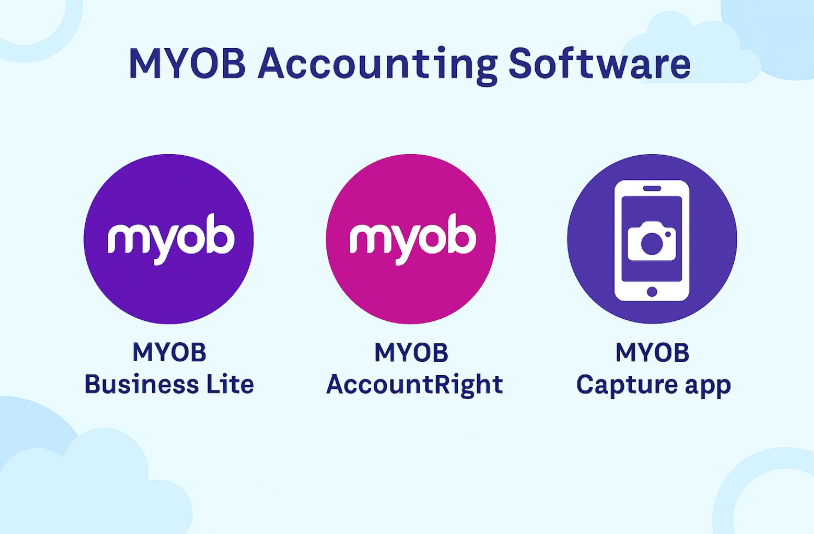
MYOB Accounting Software Overview
MYOB software has held a significant market share in the Australian market for decades. It is trusted by Australian small businesses for its desktop reliability and has expanded into cloud-based accounting.
Key Features of MYOB
- MYOB Business Lite for sole traders and micro businesses.
- MYOB AccountRight subscriptions for growing businesses that need advanced reporting, multi-currency accounting, and payroll.
- MYOB Essentials for streamlined bookkeeping and accounting tasks.
- MYOB Capture app for uploading receipts and simplifying expense management.
- Inventory management and basic inventory tracking features.
- Business day phone support for administrative help.
Pros of MYOB
- Strong presence in the Australian market.
- Familiar interface for businesses already using desktop accounting software.
- Good cash flow management and business insights tools.
- Options for windows PC users who prefer desktop software.
Cons of MYOB
- User limit restrictions.
- More manual data entry compared to Xero.
- Some advanced features are locked behind higher subscription tiers.
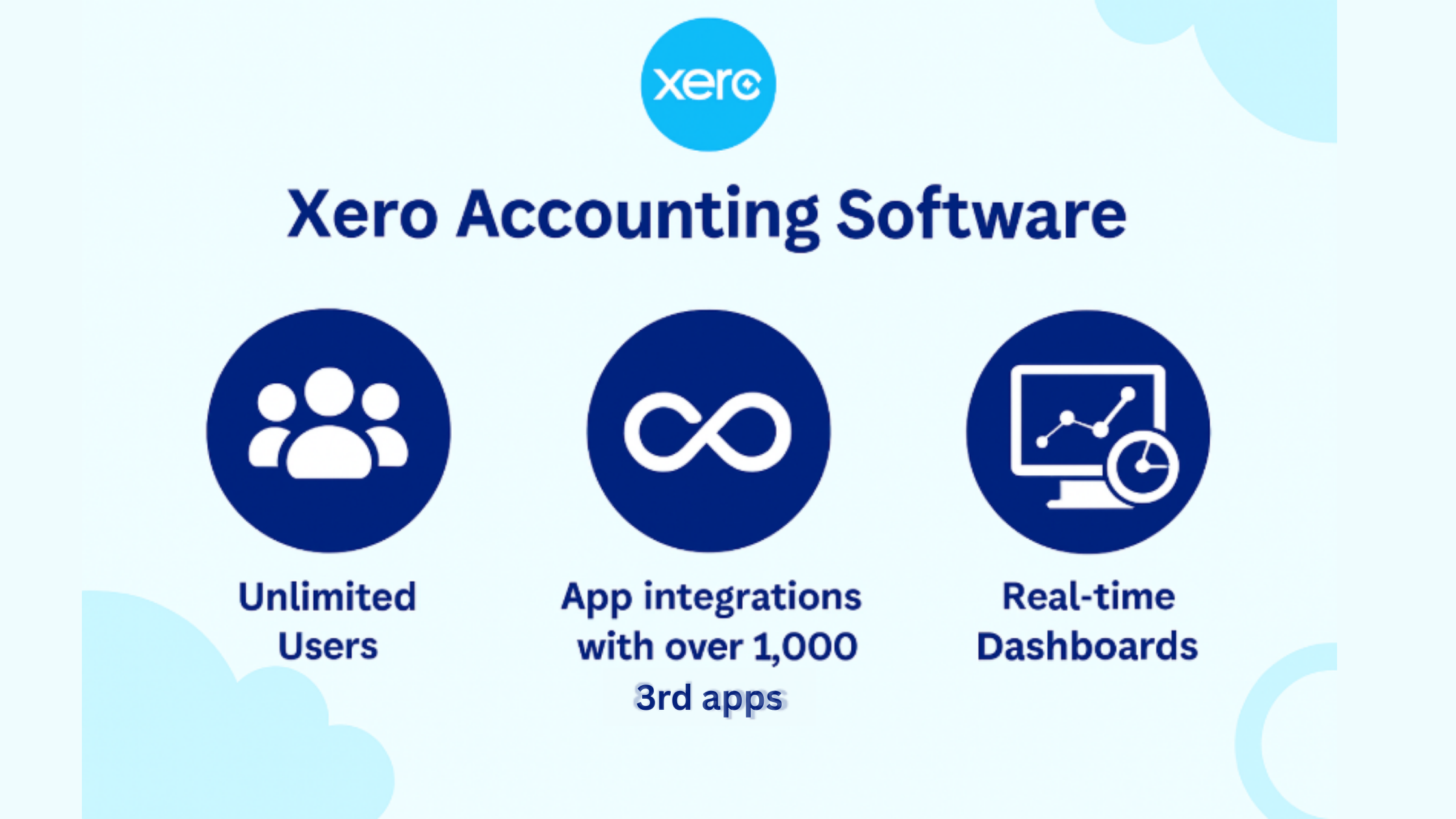
Xero Accounting Software Overview
Xero accounting software markets itself as beautiful accounting software designed with an intuitive interface. It is 100% cloud-based and highly popular among accountants for its collaborative features.
Key Features of Xero
- Unlimited users across all Xero subscriptions.
- Bank feeds that automatically reconcile bank accounts and reduce manual data entry.
- Mobile app for managing accounting tasks on the go.
- App integrations with over 1,000 third-party apps for inventory tracking, CRM, and payroll.
- Cash flow management with real-time dashboards.
- Enhanced security and strong focus on data security.
Pros of Xero
- Extremely user friendly accounting software with a clean interface.
- Strong reputation among accountants many say why accountants prefer Xero is its ability to streamline accounting processes.
- Works well for sole traders and small businesses with growth ambitions.
- Flexible cloud-based plans that scale easily.
Cons of Xero
- Some features require third-party apps, adding extra costs.
- Pricing can be higher compared to MYOB Business Lite.
- Internet connection required at all times.
MYOB vs Xero for Sole Traders
For sole traders in Malaysia, affordability and simplicity are often the top priorities. MYOB’s entry-level plan, MYOB Business Lite, is cost-friendly and covers basic needs such as invoicing, expense management, and basic inventory tracking. This makes it attractive to freelancers, online sellers, and micro-business owners who want to keep costs under control.
Xero, on the other hand, offers more flexibility for collaboration. Many Malaysian sole traders work closely with part-time accountants or outsource bookkeeping. Because Xero allows unlimited users, you can easily invite your accountant to access your financial data in real time. This feature is particularly useful for compliance with Malaysia’s tax regulations, including SST (Sales and Service Tax) reporting.
- Choose MYOB if you want a simple and budget-friendly solution to handle your accounting tasks on your own.
- Choose Xero if you expect to collaborate with an accountant or plan to scale your operations beyond a one-person setup.
MYOB vs Xero for Small Businesses
For small businesses handling more accounting tasks, both platforms deliver solid performance.
- Xero vs MYOB pricing: MYOB AccountRight subscriptions offer robust tools for inventory management and payroll, which can be helpful for retail or trading companies with physical stock. However, MYOB’s cloud presence in Malaysia is less dominant compared to Australia, which means support and integrations can feel limited.
- Inventory tracking: Businesses with heavy inventory management needs may prefer MYOB. Those using third-party apps may find Xero’s integrations more advanced.
- Processing payroll: Xero’s unlimited payroll option offers clear value.
Xero accounting software has been gaining strong traction among Malaysian SMEs, especially startups, professional services, and e-commerce businesses. Its cloud based accounting software integrates well with local payment gateways and banking partners that offer bank feeds, making cash flow monitoring easier.
Another key advantage is Xero’s wide network of Xero-certified accountants in Malaysia. Many accounting firms now recommend Xero because of its ease of use, customisable reports, and real-time collaboration features. This makes compliance with local tax laws and multi-currency accounting (important for SMEs trading with Singapore, Australia, or global suppliers) much smoother.
- Choose MYOB if your business is inventory-heavy and you need detailed advanced reporting in-house.
- Choose Xero if your business relies on digital tools, cross-border trade, or outsourced accountants who prefer working on a cloud accounting platform.
Why Do Accountants Prefer Xero
Accountants prefer Xero because it is fully cloud-based, offers real-time access to financial data, automates bank feeds and reconciliations, and allows unlimited users. These features reduce manual data entry, improve accuracy, and make collaboration with clients easier compared to traditional accounting software.
Do You Still Need an Accountant If You Use Xero?
Yes, you still need an accountant, but Xero makes collaboration far more efficient.
Even with cloud based accounting software like Xero, an accountant adds value:
- Ensures compliance with tax regulations.
- Helps interpret financial information beyond raw accounting records.
- Provides strategic advice for cash flow management and growth.
MYOB vs Xero Pricing
MYOB vs Xero pricing differs in both structure and features. MYOB Business Lite starts at around RM60/month and AccountRight subscriptions cost more based on features and users. Xero plans begin at about RM120/month, with higher-tier subscriptions offering unlimited users, payroll, and multi-currency accounting.
- MYOB Business Lite: Affordable entry-level plan with limited features.
- MYOB AccountRight subscriptions: Scales with growing businesses; pricing varies by features such as unlimited payroll.
- Xero subscriptions: Range from starter to Xero’s premium plan with more advanced features like multi-currency accounting.
| Software | Entry Plan | Mid-Tier Plan | Premium Plan | User Access |
|---|---|---|---|---|
| MYOB | Business Lite (~RM60/month) | MYOB Essentials / AccountRight (~RM120–RM200/month) | Advanced AccountRight (varies, higher for payroll & inventory) | User limits apply |
| Xero | Starter (~RM120/month) | Standard (~RM240/month) | Premium (~RM340+/month) | Unlimited users, multi-currency in premium |
Advanced Features and Reporting
Both MYOB and Xero offer advanced features and reporting, but they differ in focus. MYOB provides stronger built-in tools for inventory management, payroll, and advanced reporting, while Xero excels in customisable reports, real-time dashboards, and integrations with third-party apps for deeper financial insights.
MYOB Advanced Features
- In-depth inventory management with cost tracking.
- Detailed advanced reporting for sales, purchases, and payroll.
- Desktop-compatible with MYOB AccountRight subscriptions.
- Strong cash flow management tools.
Xero Advanced Features
- Customisable reports and unlimited report templates.
- Real-time cash flow dashboards.
- Over 1,000 third-party app integrations for reporting and analytics.
- Automated bank feeds and reconciliation to reduce manual work.
Conclusion
When comparing Xero vs MYOB, the right choice depends on your business needs. Choose MYOB if you value basic inventory tracking, desktop compatibility on a Windows PC, and direct phone support. Choose Xero if you prefer a fully cloud based accounting software, an intuitive interface, unlimited users, and seamless collaboration with accountants.
Both platforms remain leading accounting software options for small businesses, sole traders, and growing businesses. They help simplify admin, streamline bookkeeping, and provide clear insights into cash flow management.
At Caltrix, we specialise in guiding businesses through this decision. As a Xero Gold Partner with deep experience in accounting technology, our team helps you assess the key differences between software, integrate the right cloud accounting platform, and set up processes that reduce manual data entry, improve financial data accuracy, and enhance business insights.
Let Caltrix’s experts guide you. We’ll help you choose, set up, and optimise the right platform.
